
End client: PG&E
Wolfe Rd Interchange Improvements (Cupertino)
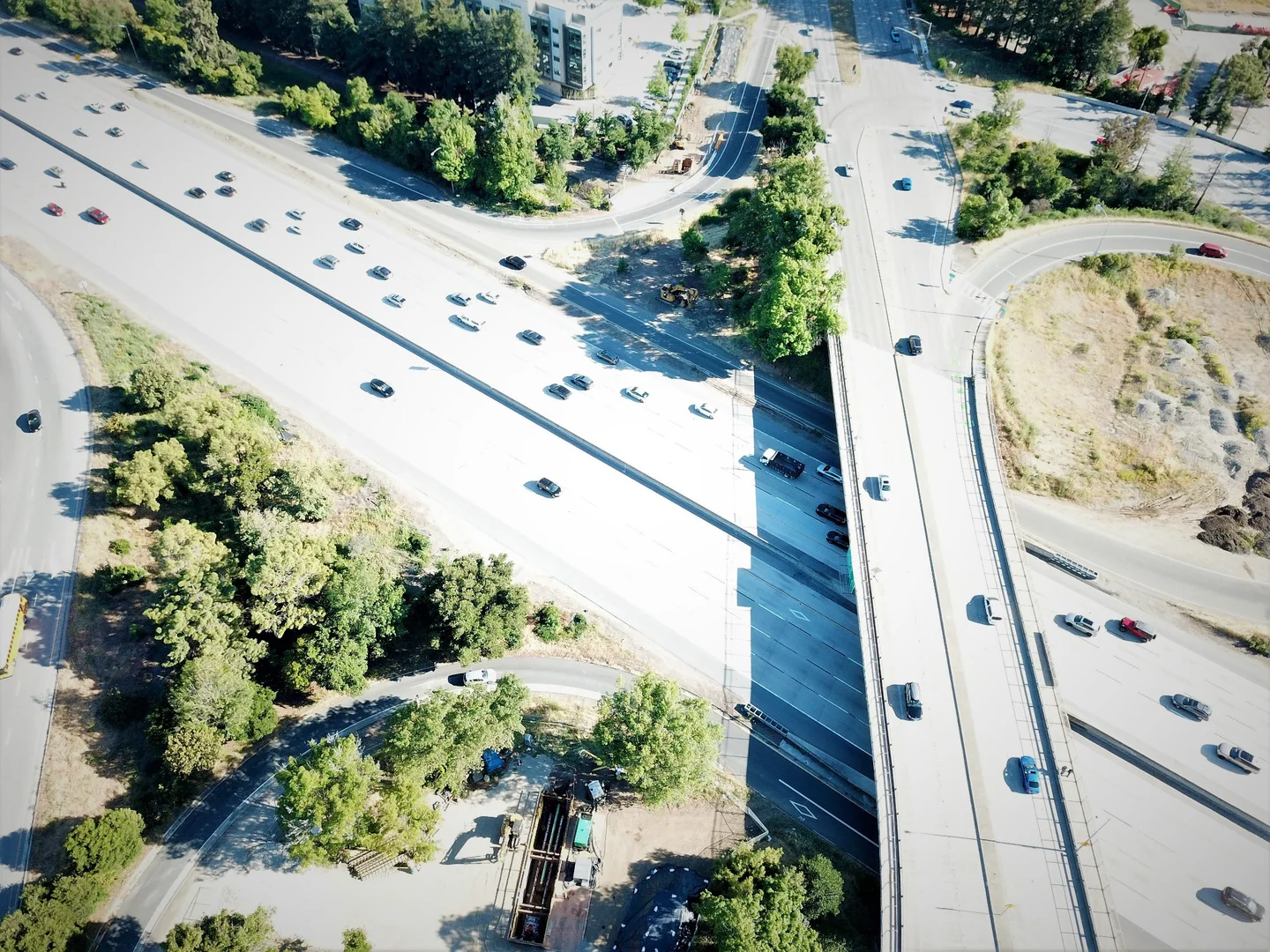
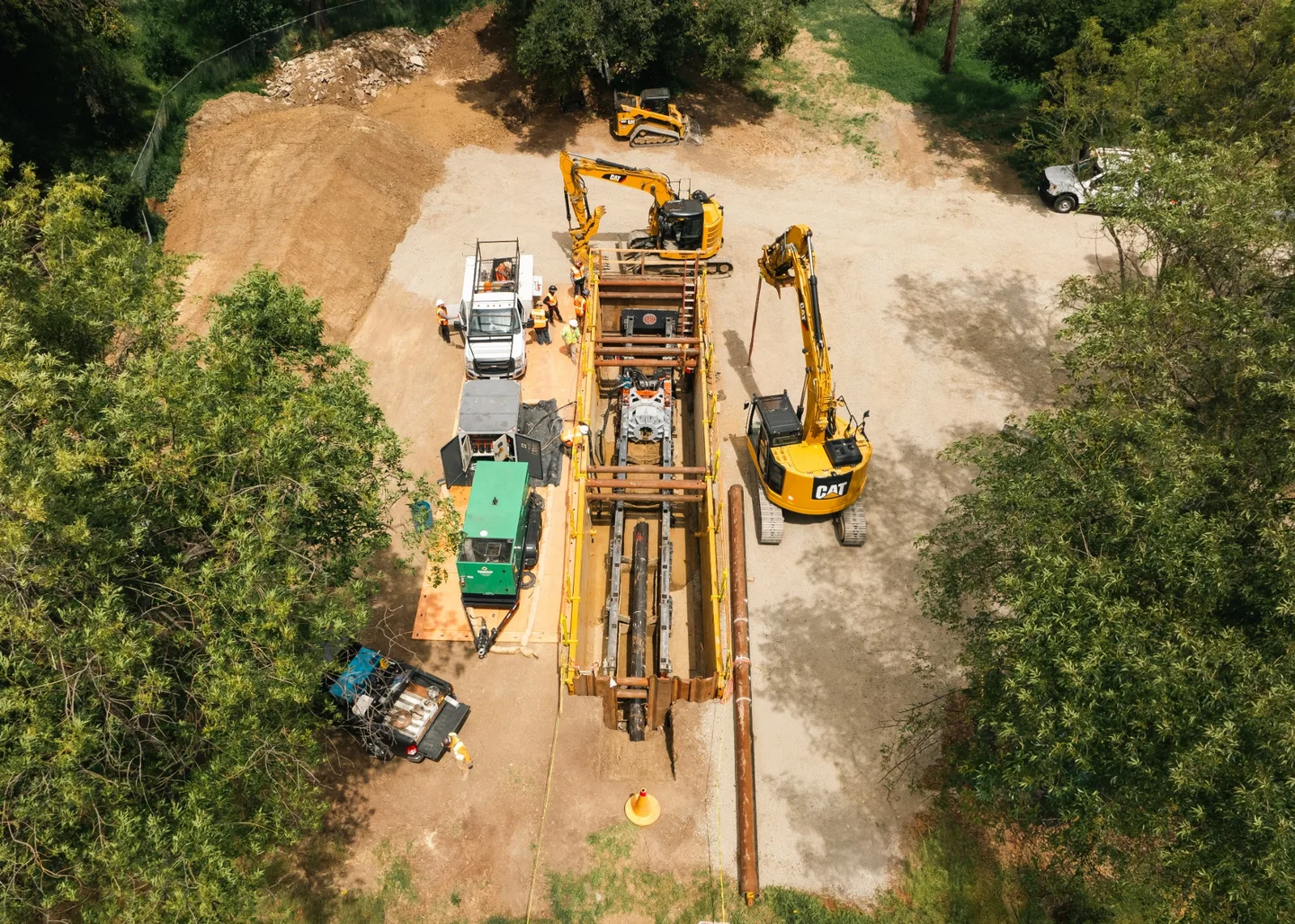
Working with Precision Directional Boring (PDB), the team installed the specified steel casing under I-280 in a single drive of approximately 500 feet.
 CSLB #1115805
- Single bore
- Approx. 500 ft
- Steel casing
- 16″
- Gas carrier pipe
- 12″
- Highway crossing
- I-280
The challenge: two very different soils
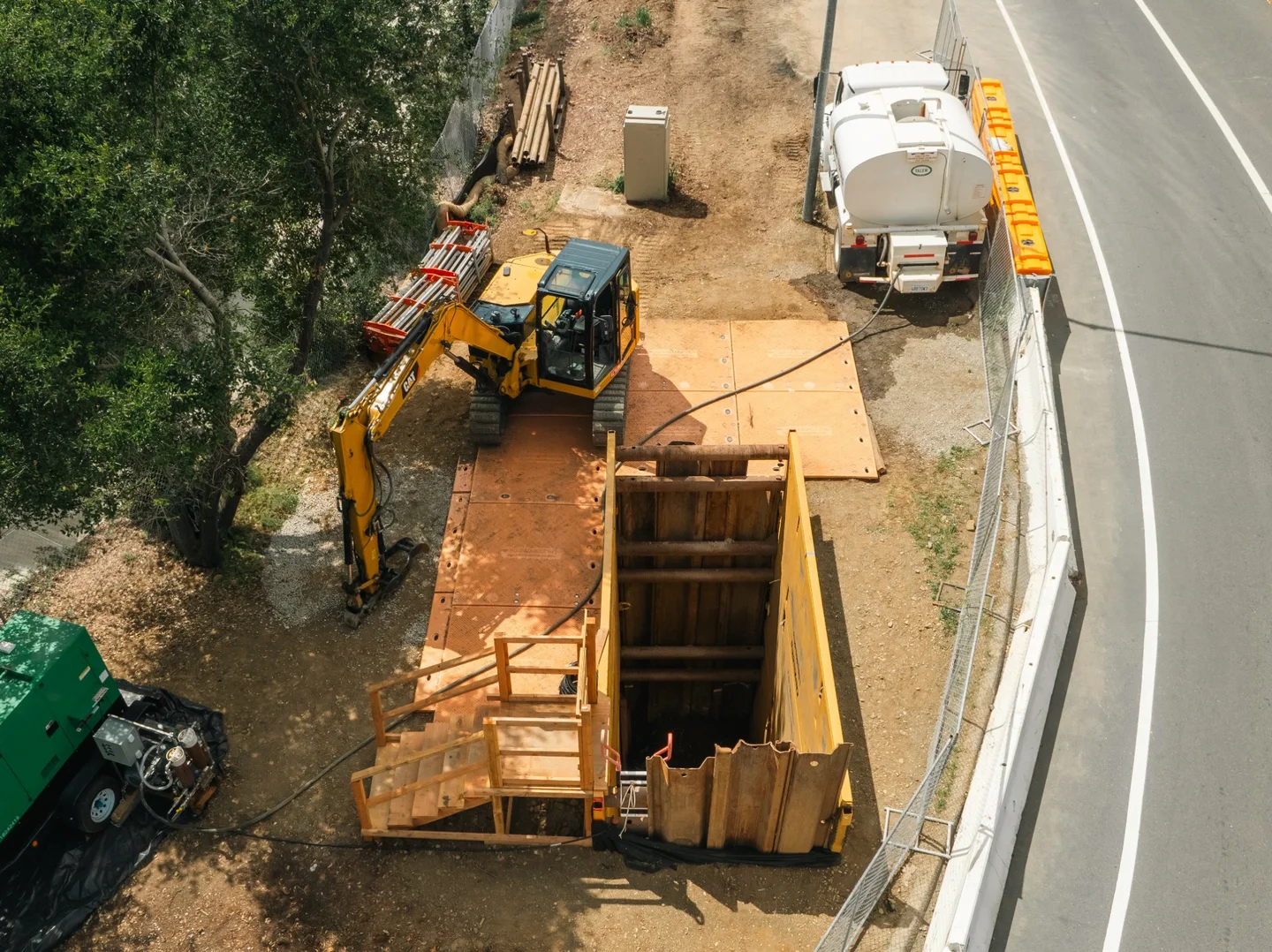
PG&E’s gas line called for a 12-inch carrier pipe inside a 16-inch steel casing beneath Interstate 280. At the launch pit, soil samples showed very soft bay mud. At the reception pit, they showed cobbles. The soil exploration did not locate the transition between the two beneath the freeway.
That uncertainty mattered when choosing the equipment. A setup that advanced through the mud might behave differently once it reached cobbles. The team had to decide how to complete the crossing at the specified diameter and what to do if the first method stopped advancing.
Why the team kept the 16-inch casing
Alternatives discussed for the crossing included upsizing the bore to around 30 inches to give crews more room to intervene if the drive stalled. Working with PDB, Roberto Zillante’s team kept the specified diameter and chose pilot-guided auger boring. The pilot would establish the path before the steel casing advanced.
The boring platform could also run Assisted Dynamic Boring (ADB). The team kept that configuration available as a contingency so it had another option if the selected method could not continue in the changing ground.
One drive, without changing methods
The crew installed the 16-inch casing in one bore of approximately 500 feet. Pilot-guided auger boring carried the drive through to reception; the team did not need to switch to ADB. The finished casing stayed at the diameter specified for the 12-inch gas carrier.
Watch the crossing
See the crew, the equipment and the site during the Cupertino installation.
The crossing that helped start Phoenix
Zillante and PDB completed the paid crossing before Phoenix Boring began operations. The job showed what the team could deliver using the same modular equipment it had helped develop. It gave early investors a concrete example of the construction business Zillante was putting together: a contractor able to adapt its own equipment to a job and execute the crossing.
Project background: The crossing that helped start Phoenix
Discuss a crossing