
Technical presentation
Understanding PyroHDD
Thorin Tobiassen presents the project at the ARPA-E GOPHURRS annual meeting hosted by the Western Energy Institute.
Watch Film
Phoenix Boring / Engineering & R&D
Our main R&D focus today is PyroHDD. With support from the U.S. Department of Energy’s ARPA-E, we’re developing a new way to install medium-voltage distribution lines without open trenches.
Our 6-in-1 platform already works in the field. We keep refining it and building job-specific tools while we develop what comes next.
Autodesk Shop Talk
The Phoenix R&D team talks with Autodesk about the engineering behind our crossings.
In development / U.S. DOE ARPA-E
When a horizontal directional drill goes from soil into hard rock, the crew may have to pull the drill string out to change the cutterhead. That costs time and can leave the open bore vulnerable to collapse.
PyroHDD is designed to keep drilling with the same head. In hard rock, the hybrid cutterhead can turn on thermal spallation to fracture the rock surface while mechanical cutters advance the bore. Back in soil, the thermal system shuts off and the head continues cutting mechanically. Avoiding a trip out of the bore for a tooling change is intended to shorten installation time, lower costs, and reduce the collapse risk associated with those interruptions.
That’s why the U.S. Department of Energy’s ARPA-E supports the project through GOPHURRS. The goal is to make it faster and more economical to put medium-voltage distribution lines underground where the route runs through both soil and rock. The non-turbine combustor (NTC) is a key component we’ve developed and are testing in the lab. PyroHDD is still in development, not a commercial service.
Read the DOE project summaryPyroHDD / Concept animation
The rotating head follows the entry angle. Blue traces show bentonite returning around the rods.
Technical presentation
Thorin Tobiassen presents the project at the ARPA-E GOPHURRS annual meeting hosted by the Western Energy Institute.
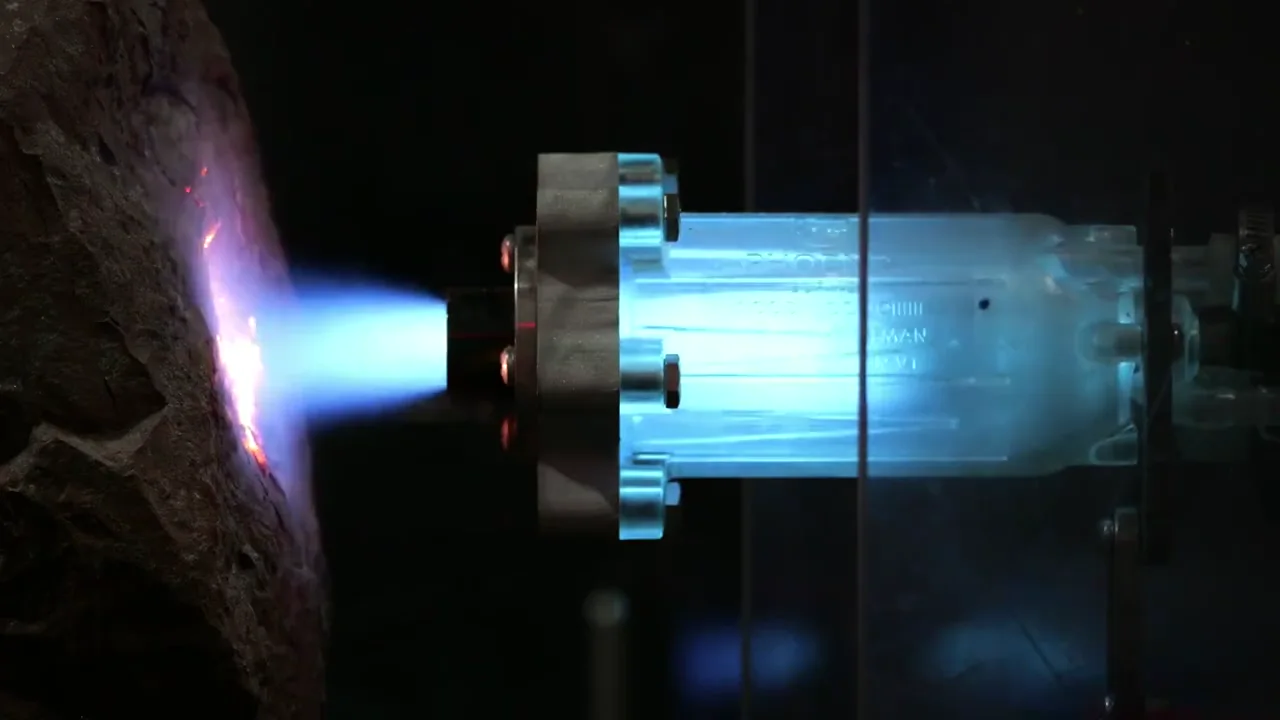
Watch FilmLaboratory prototype
The NTC supplies the heat for the hybrid cutterhead. This video shows a sustained bench test of the combustor, not a complete drilling system or an installation in the field.
Watch full-size with soundOn the job / Field engineering
Our engineering and fabrication teams develop cutter heads, adapters and other tools to solve problems the field brings back to the shop.
Fielded / Custom tooling
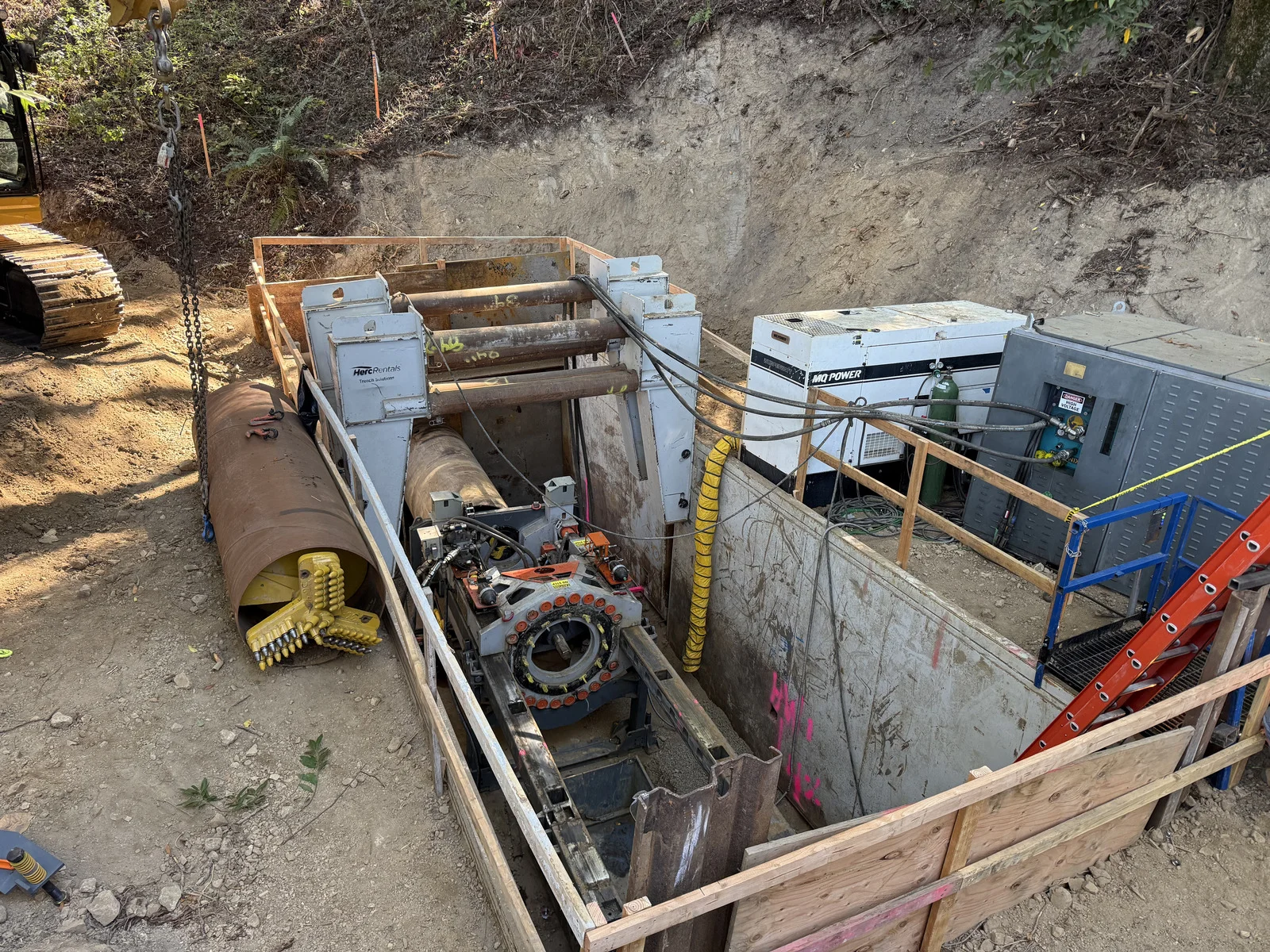
We design adapters and specialized heads to fit the pipe, ground and space available on each job. At Ben Lomond, our team designed a lightweight fixed-wing front reamer, or spider, to transition from the guided pilot to a 36-inch steel casing without losing the pilot’s alignment.
Fielded / Project-specific engineering
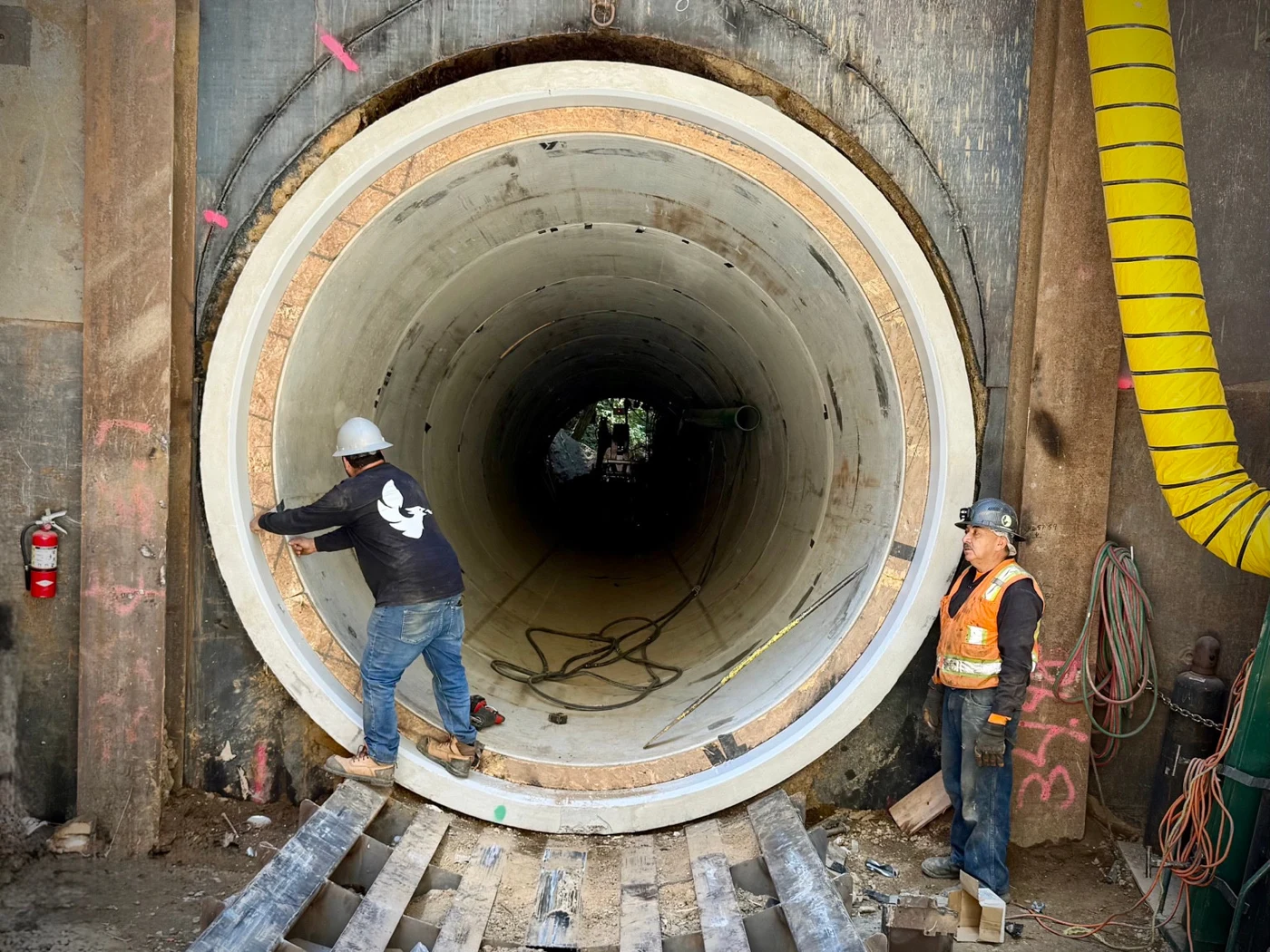
For a 120-inch inside diameter reinforced concrete pipe, we adapted our boring machine to push a pipe larger than it was originally designed for. The crew could remove the sectional shield in pieces at the constrained exit, making the short drive practical without mobilizing a dedicated tunnel boring machine.
Read the case studyPlatform engineering / 6-in-1
We designed the ADB48 as a platform, not as a single-purpose boring machine.
The same drive frame and thrust system stay in place. Crews can adjust boring parameters such as thrust, rotation and advance rate, and swap tooling, components and accessories to change the method without changing the base machine.
Four configurations use established trenchless methods. Two are Phoenix-developed: Assisted Dynamic Boring for unstable ground and Jet Bore, in development for hard rock.
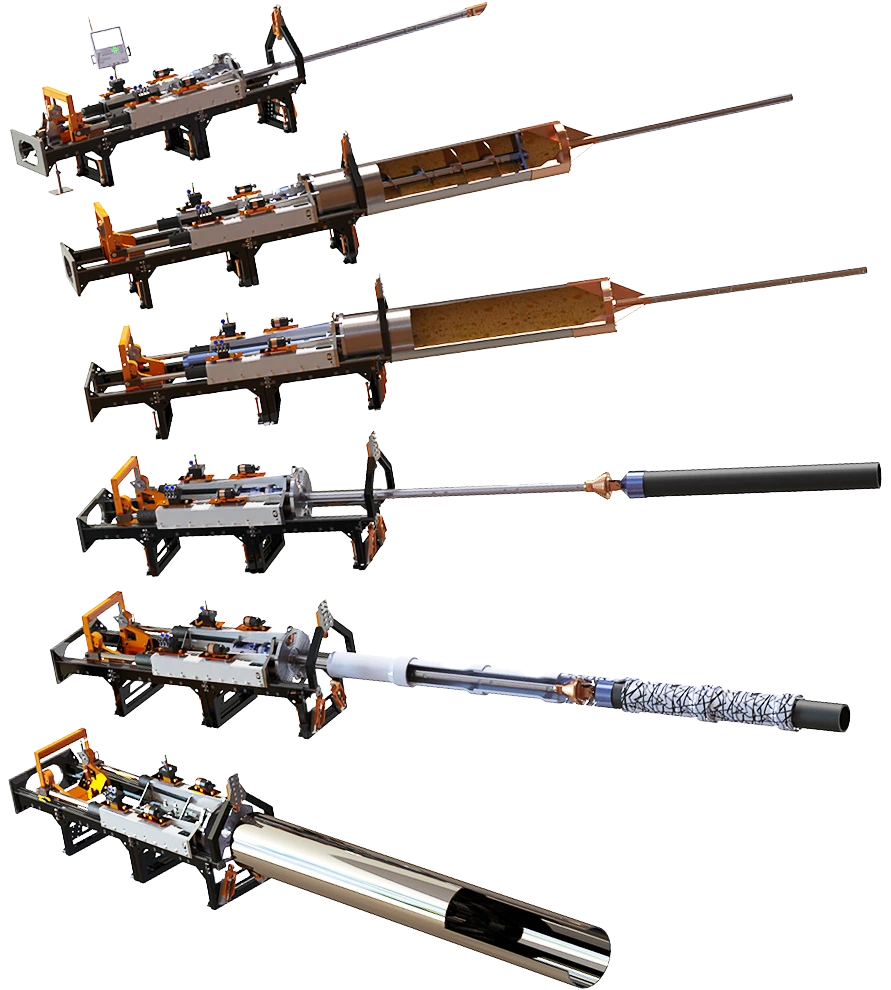
Fielded technology / Assisted Dynamic Boring (Assisted Pipe Ramming)
With our patented Assisted Dynamic Boring (ADB) method, we designed the machine to separate casing advance from soil removal. Hydraulic thrust and percussion work together to drive the steel casing through soft or unstable ground. The casing supports the ground as it advances. The crew then uses an auger to remove the soil from inside the casing.
Hard-rock research / Jet Bore
Jet Bore uses thermal spallation: rapidly heating the rock’s surface creates stresses that cause small flakes to break away. The lab footage shows the rotating jet. The two Raymond clips show what the same process looks like at the rock face and how the bore progresses over time.
Intellectual property / Territorial rights
The portfolio includes grants for underground pipe installation, multi-tool systems and rock boring technology. Select a country to see the relevant public patent records.
At least one grant in force
A European grant is listed by country where it was validated and maintained. Publication or allowance of an application does not mean a patent is in force.
Selected public records reviewed November 2026. European validations are counted once in the grant count, not once per country. Pending applications are not granted rights; unpublished filings are not shown.
From tool to crossing
